
MPLock Identifier
Identify your lock now!
Identify your lock now!
If your HOPPE multipoint lock feels “almost right” after installation but won’t fully lock, the issue is usually final-assembly alignment rather than a defective lock. This guide covers two common symptoms: (1) the deadbolt won’t fully engage from the key side, and (2) the key or cylinder won’t turn smoothly.
Key Takeaways
Use these images to match the terms in this guide (latch, deadbolt, handle height, and PZ) to what you see on the door. Click either image to zoom.
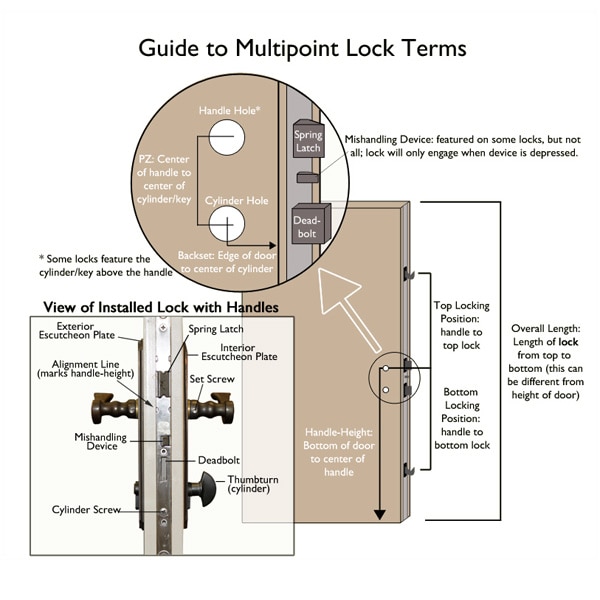
Multipoint lock parts and measurement overview
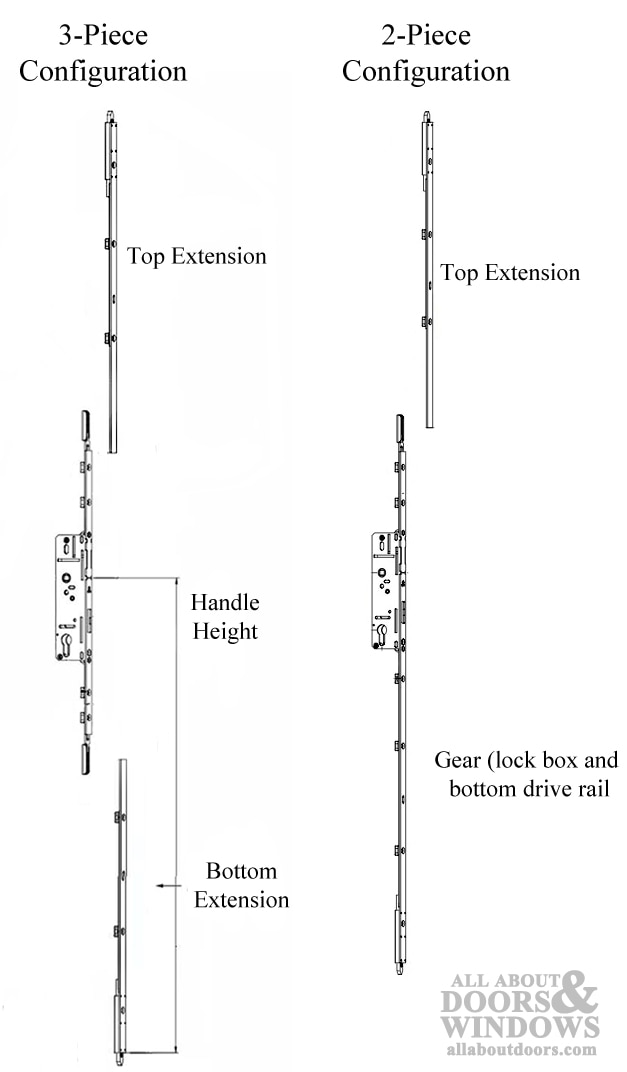
Common 2-piece vs 3-piece lock layouts
These references are meant to orient you visually before troubleshooting. You don’t need to memorize them to continue.
If everything works correctly with the door open but binds when the door is closed, the issue is often door-to-frame alignment or strike positioning. If it binds even with the door open, focus on hardware assembly and internal movement of the lock.
What it feels like: You lift the handle, but when you try to extend the deadbolt using the key, it stops short or will not complete the turn.
Most common cause: The system’s other locking points, commonly shootbolts, are not fully engaged. Many HOPPE multipoint lock designs prevent full deadbolt operation unless the drive rail has completed its full travel.
What to Look For
When you lift the handle, the shootbolts should move smoothly and reach full extension. If they stop early or bind, the lock may not allow the deadbolt cycle to complete from the key side.

Shootbolt travel must complete before the deadbolt can fully engage.
Fix Checklist
What it feels like: The key will not turn, turns stiffly, or feels like it is being pinched.
Most common cause: The inside and outside handle backplates are slightly misaligned, or the mounting screws are over-tightened. This can place side pressure on the cylinder and interfere with smooth key rotation. If you are unsure whether your handle spacing matches the lock, review what PZ means on a multipoint lock. For broader context on sizing and fit, see our door lock measurement guide.
Fix Checklist
If you feel metal-on-metal grinding, the handle will not lift fully, or the door must be forced to lock, stop and recheck: (1) door squareness in the frame, (2) strike alignment, and (3) whether the lock operates freely with the door open. Smooth operation should always come before full lock engagement.